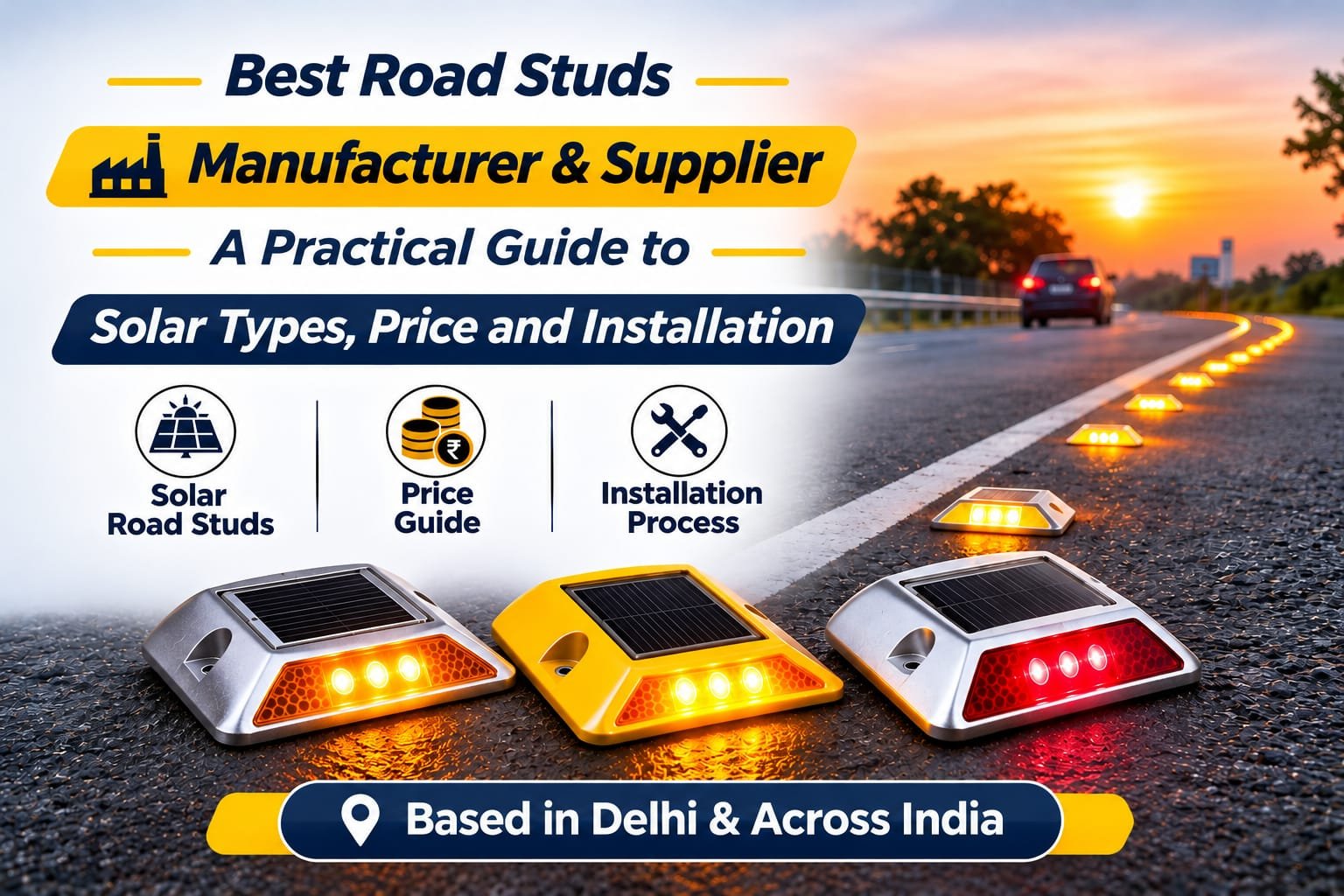
Night driving on an unlit highway is a test of nerves. Faded paint disappears in rain and fog, and curves arrive without warning. Well-chosen road studs fix this by giving drivers a clear, glowing guide line that keeps working when paint does not.
This guide explains how solar markers work, which types exist, where they perform best and what drives the price. LTS Road Safety shares practical buying and installation advice to help you specify the right product.
You will also see how to compare suppliers and avoid common installation mistakes.
What Are Road Studs and Why They Matter
Road studs are small raised markers fixed to the pavement to guide drivers at night and in poor weather. People also call them cat’s eyes or raised pavement markers. They sit along lane lines, medians, curves and edges, and they stay visible when painted lines fade.
Their value comes from contrast and early warning. A stud gives a clear visual cue, and drivers often feel a slight vibration when a vehicle drifts over one. On roads with heavy fog, rain or poor street lighting, that signal can prevent lane departure and head-on conflicts.
Paint alone wears under traffic and hides under water. Studs fill that gap, and they last longer when selected and fixed correctly.
What Is a Solar Road Stud and How It Works
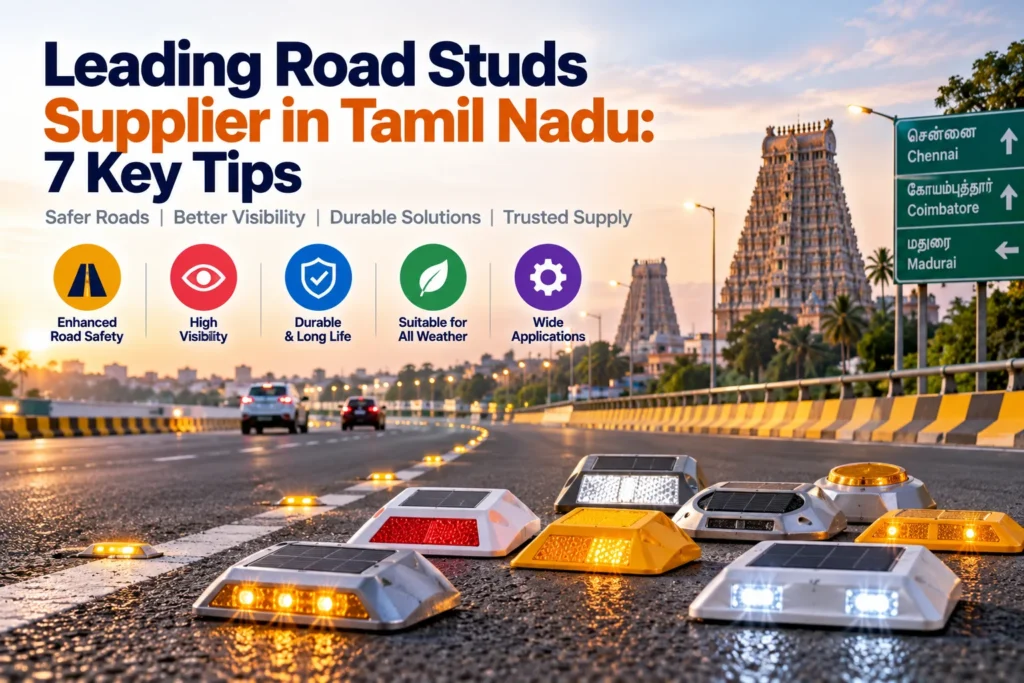
A solar road stud is an active marker that makes its own light. It has a small solar panel on top, a rechargeable battery inside, LED lamps and a light sensor in a rugged housing. Unlike passive reflectors, it does not rely on vehicle headlights alone.
During the day, the panel charges the battery. When light drops at dusk, the sensor switches the LEDs on, and they glow steadily or flash through the night. Many designs also include a reflective surface as a backup if the battery runs low.
Because they are self-powered, these markers need no wiring or road trenching. That cuts installation time and makes them practical for remote highways, hill roads and bridges. Solar road studs also stay visible from a far greater distance than paint, though the claimed range varies by model, so ask the maker for tested figures.
Types and Materials You Will See
Passive studs use glass beads or prismatic lenses to reflect headlights. They cost less and need no power, but they work only when light hits them. Solar studs add active LEDs and shine on their own, which helps in fog and on unlit stretches.
A solar cat eyes road stud usually has a low profile, a flat solar panel and LEDs on one or both sides. Unidirectional versions face one direction of traffic, while bidirectional versions serve two-way roads. Common colors include white for lane lines, yellow for medians and hazards, red for wrong-way warnings, and blue or green for special zones.
Housings are commonly made from cast aluminium or tough polycarbonate and similar engineering plastics. Aluminium handles heavy loads well, while good plastic resists corrosion and impact. Whatever the material, look for a high ingress protection rating, a strong compressive load rating and UV-stable lenses.
Where Solar Road Stud Lights Make the Biggest Difference
Highways and expressways come first. Lane edges, medians and exits become far clearer in fog, which is a real winter hazard across north India, including the Delhi NCR belt. Curves and hairpin bends on hill roads benefit as well, since solar road stud lights warn drivers before the turn begins.
Bridges, flyovers, toll plazas and junctions are other strong uses. Pedestrian crossings and school zones gain from flashing markers that draw attention at dusk. Industrial campuses, ports, airports and large parking areas also use them to guide vehicles where street lighting is thin.
Placement matters. Closer spacing on curves and hazards improves guidance, while wider spacing works on straight stretches. Follow the marking design and local guidelines for spacing, color and direction, and discuss your layout with LTS Road Safety if you want a second opinion.
Choosing Among Manufacturers and Suppliers
Start with a clear specification. Define the road type, traffic load, color, direction, flash pattern, quantity and fixing method. Then ask each supplier to quote against that sheet, so offers can be compared fairly.
Brand names appear in many searches, including 3M solar road studs. Treat a name as a starting point, not proof of fit. Compare tested specifications such as luminous intensity, battery type and capacity, charging time, load rating, ingress protection and operating temperature, whichever brand you consider.
Credible solar road studs manufacturers share test reports, datasheets and installation guides without fuss. Ask for testing against relevant standards, such as IRC road marking guidance and EN 1463 for retroreflective studs, and confirm the current requirements for your project. Request samples and trial them on a short stretch before a bulk order, and approach LTS Road Safety to discuss sample requirements. Also check warranty terms, spare availability and after-sales support.
Local sourcing helps. Delivery, sample trials and replacement of damaged units move faster when the supplier is close to your site, which matters for buyers in Delhi NCR and across north India.
Solar Road Studs Price in India: What Affects the Cost
Price depends on build quality more than brand name. Housing material, solar panel size, battery type, LED brightness and the number of LEDs all change the cost. Load rating, waterproofing, color options and flashing modes add to it.
Quantity matters as well. Bulk orders usually bring a lower price per piece, but compare what each quote includes, such as adhesive, anchoring pins, packaging, freight and warranty. A cheaper stud with a weak battery can fail within a season, which costs more in replacement and traffic disruption.
Ask for total cost over the expected life, not only the purchase price. LTS Road Safety recommends sharing your quantity, road type and timeline up front so the quotation reflects real needs.
How to Install Solar Road Studs
Good installation decides how long the stud lasts. Plan the layout first, marking positions along the lane line, curve or median according to the design. Check that each stud will receive open sun, with no shade from barriers or signs.
Prepare the surface next. Clean it of dust, oil and loose material, and make sure it is dry. Some models are bonded with epoxy or bitumen adhesive, while others use drilled holes and anchor pins. Follow the maker’s instructions for your pavement type.
Apply the adhesive, press the stud firmly into the marked position and align the lenses with the traffic direction. Allow the adhesive to cure fully before opening the lane, and use proper traffic control throughout. Install in dry weather, and keep the right tools and safety gear ready.
After installation, clean the panels every few months to remove dust, and replace units that are damaged or dim. A short inspection after the first rains catches loose studs early.
Frequently Asked Questions
What are road studs used for?
Road studs are raised pavement markers that guide drivers at night and in poor weather. They mark lanes, edges, medians and curves. Solar versions glow on their own, so they stay visible in fog and rain.
How do road studs improve night safety?
They give drivers a bright, raised cue exactly where the lane edge or curve begins. That early signal helps prevent lane drift and late braking. On roads with poor lighting, this guidance can make a real difference.
What is a solar road stud and how does it work?
A solar road stud is a self-powered marker with a solar panel, a rechargeable battery, LEDs and a light sensor. The panel charges the battery in the day, and the sensor turns the LEDs on at dusk. This lets the stud shine all night without wiring.
How long does a solar cat eye last?
Life depends on battery quality, traffic load, climate and how well the stud was fixed. Good units can serve for several years, while weak ones fail early. Ask the maker for tested life figures and warranty terms.
Do solar studs work in fog and rain?
Yes, active LED studs shine through fog and rain far better than paint or passive reflectors. They need sunlight to charge, and several cloudy days can reduce the charge. Check the battery autonomy figure before you buy.
Can solar studs be installed on any road surface?
They suit asphalt and concrete when the surface is clean, dry and sound. Roads with heavy truck traffic need studs with a higher load rating. Always follow the maker’s fixing instructions and your project design.
How do I order solar road stud lights in bulk?
Share your quantity, colors, direction, flash pattern and delivery timeline with the supplier. Ask for samples, datasheets and test reports before placing the order. LTS Road Safety can help you shape the specification and quotation.
Conclusion
Road studs give drivers a reliable guide when paint, street lights and visibility fail. Solar versions add self-powered light, easy installation and strong value on highways, curves and bridges. Choose by tested specifications, not brand names, plan the layout carefully and install with proper surface preparation.
If you need help selecting or sourcing, contact LTS Road Safety today. Share your road type, quantity and timeline, and request samples and a detailed quotation.